



Electronics News
Archive : 25 January 2026 год
At CES 2026, leading memory makers emphasized solving data movement challenges by boosting bandwidth, lowering power use, and improving reliability across storage and DRAM solutions.
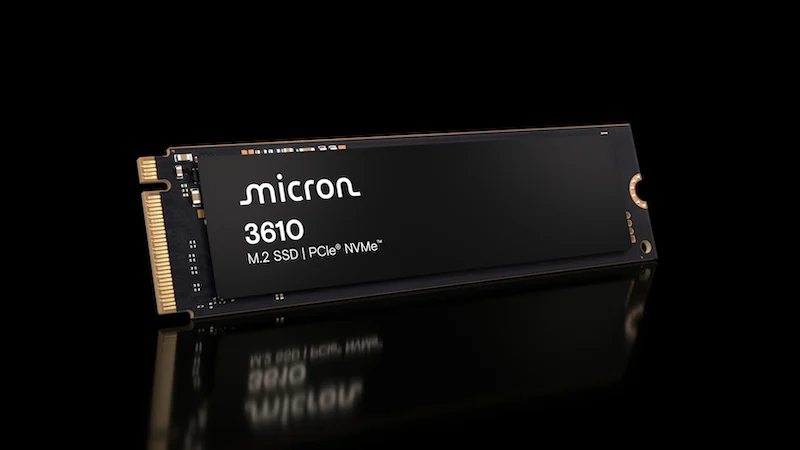
Micron’s New Gen5 QLC SSD for Thin Systems
[Image: Micron 3610 SSD]
Micron unveiled the 3610 NVMe SSD, promoted as the world’s first PCIe Gen5 client drive using its G9 QLC NAND technology. This SSD aims to give thin-and-light laptops and small form-factor PCs a big boost in both speed and storage capacity within a compact module.
- Up to 11,000 MB/s sequential reads and 9,300 MB/s writes.
- Strong random I/O performance suitable for modern workloads.
- Ultra-high capacity up to 4 TB in a single-sided M.2 card.
- High efficiency with low-power states and DRAM-less design.
This design focuses on lowering power while maintaining responsiveness for AI and productivity tasks.
Cadence Boosts Reliability for Low-Power DRAM
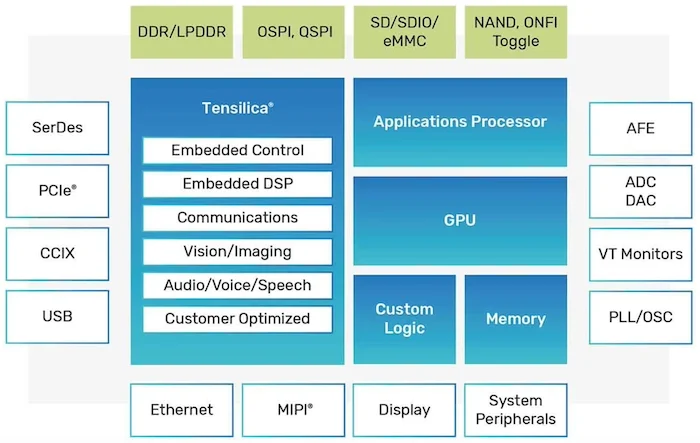
With growing demand for low-power memory in data centers, Cadence introduced a new system IP that combines LPDDR5X with DDR5-class reliability features. The integration of Microsoft’s RAIDDR ECC algorithm brings advanced error correction to LPDDR5X, closing the gap between low-power DRAM and enterprise-grade reliability
- Supports up to 9600 Mbps data rates with efficient low-power operation.
- Sideband ECC delivers reliability close to traditional DDR5.
- Designed for AI training, inference, and other heavy data workloads.
SK Hynix Highlights High-Bandwidth Memory Innovations
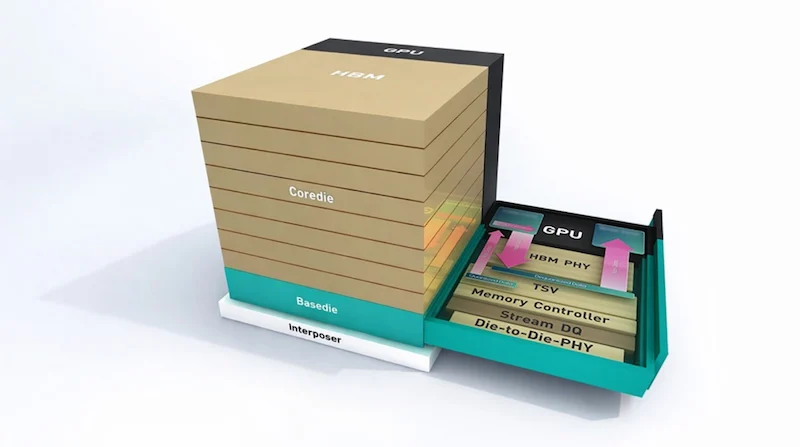
SK Hynix showcased its next wave of AI-oriented memory, including a new 16-layer HBM4 memory module with expanded capacity and bandwidth. In addition to HBM, the company displayed LPDDR6 for mobile AI use and innovative low-power modules like SOCAMM2.
- 16-layer HBM4 with 48 GB for future high-performance computing.
- 12-layer HBM3E presented for near-term adoption.
- Memory modules tailored for AI servers and pooled memory.
- 2 Tb QLC NAND flash designed for ultra-high capacity storage.
At its booth, SK Hynix also demonstrated concepts that reduce data movement and improve power efficiency, key trends in next-generation memory design.
Together, these announcements signal how memory companies are responding to the needs of AI-focused systems and energy-sensitive devices by improving both hardware efficiency and robustness.