



Researchers have developed a groundbreaking semiconductor chip capable of writing DNA sequences in parallel, representing a major leap in synthetic biology and DNA data storage technologies. This innovation dramatically increases the speed and efficiency of DNA synthesis compared to traditional sequential methods.
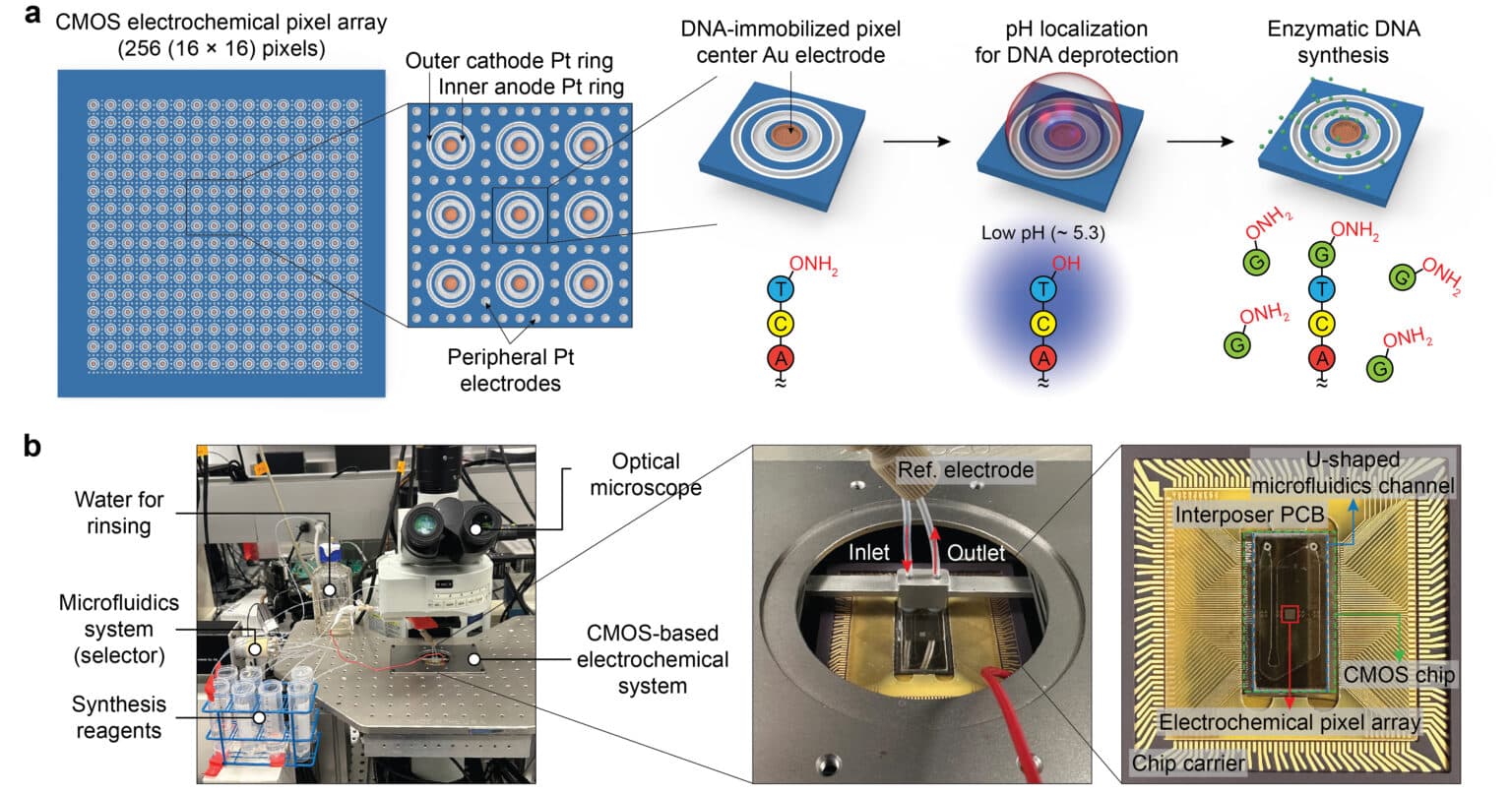
New semiconductor chip enabling parallel DNA sequence writing
Key Innovation
Unlike conventional DNA synthesizers that build sequences one base at a time, the new chip uses an array of microscopic electrodes to simultaneously control multiple synthesis sites. This parallel approach significantly accelerates the process and reduces costs, making large-scale DNA writing more practical for industrial and research applications.
Potential Applications
- High-throughput DNA data storage
- Synthetic biology and gene editing
- Custom protein and enzyme production
- Advanced diagnostics and personalized medicine
- Next-generation vaccine and therapeutic development
The technology brings us closer to practical DNA-based data storage systems, which have the potential to store vast amounts of information in extremely small volumes with exceptional longevity compared to traditional digital storage media.
While still in the development stage, this semiconductor-based DNA writing platform marks an important milestone toward scalable, cost-effective, and high-speed DNA synthesis.
Source: Electronics For You