



Electronics News
Archive : 20 March 2026 год
AI-RAN (AI Radio Access Network) is emerging as a transformative architecture that embeds artificial intelligence directly into cellular networks. Major players like Nvidia, Nokia, Ericsson, Intel, Keysight, and Samsung are collaborating to shift AI-RAN from research to deployment, as highlighted at Mobile World Congress 2026.
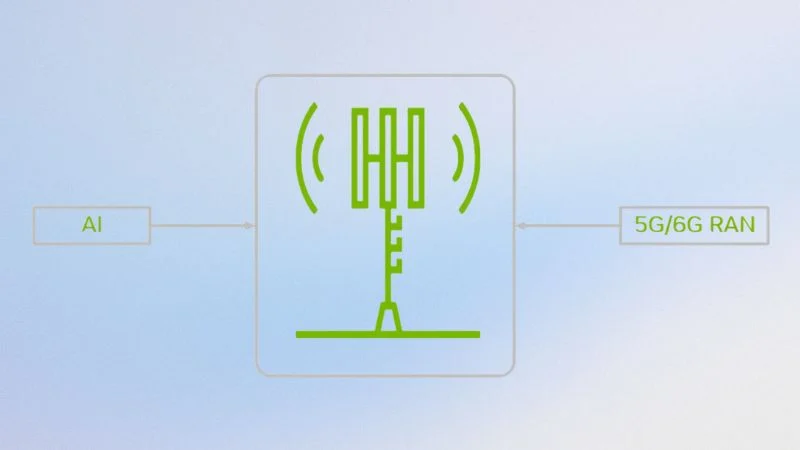
AI-RAN: Unified platform for RAN functions and AI workloads
What is AI-RAN?
AI-RAN moves away from specialized RAN hardware toward general-purpose accelerated computing platforms (often GPU-based) that run both traditional radio processing and AI models simultaneously. It follows cloud-native principles: containerization, dynamic scaling, and resource sharing. When network load is low, unused capacity can handle AI tasks, improving utilization and enabling new revenue streams.
The AI-RAN Alliance defines three key domains:
- AI-and-RAN: Shared infrastructure for RAN + AI workloads → better efficiency and hosting AI services at the edge.
- AI-for-RAN: Machine learning embedded in signal processing → higher spectral efficiency, better signal quality, optimized resource use.
- AI-on-RAN: Network edge as AI delivery platform → ultra-low latency for real-time applications.
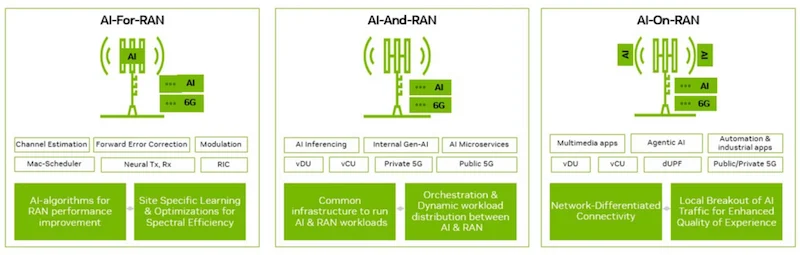
The three pillars of AI-RAN integration
Key Benefits and Drivers
- Addresses rising AI-driven traffic and low infrastructure utilization.
- Improves spectral efficiency and coverage without new spectrum or sites.
- Reduces latency for edge AI services (e.g., real-time analytics, autonomous systems).
- Opens new monetization beyond connectivity (AI hosting on telco infra).
Industry Momentum and Demonstrations
Nokia and Nvidia demonstrated concurrent RAN and AI workloads on GPU platforms, including Massive MIMO supporting video streaming + AI captioning (trials with T-Mobile, Indosat Ooredoo Hutchison, SoftBank). Other operators (BT, Elisa, NTT DOCOMO, Vodafone) explore Nvidia Aerial for AI-RAN evolution.
Ericsson and Intel collaborate on AI-native infrastructure for 6G. Keysight, Samsung, and Nvidia provide validation tools for AI-driven radio functions. Ecosystem partners (Dell, Quanta, Supermicro, Red Hat) supply COTS servers, networking, and orchestration.
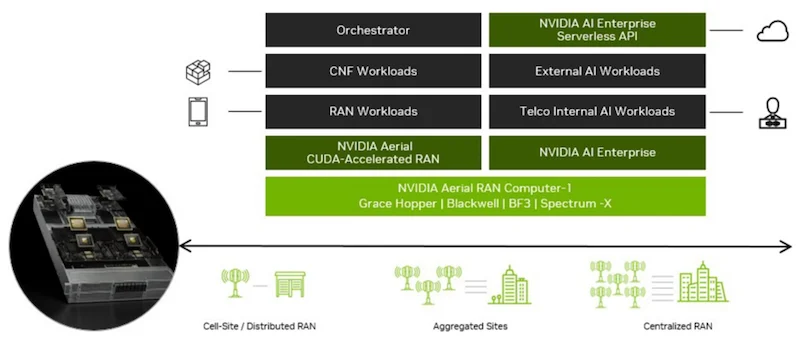
Nvidia Aerial + Nokia demo: AI + RAN on shared infrastructure
Path to AI-Native 6G
AI-RAN is a foundational step toward 6G, transforming RAN into a distributed computing platform for AI services, sensing, and real-time processing across billions of devices. Software-defined evolution enables continuous upgrades without hardware changes, supporting secure, intelligent, and interoperable networks.
With growing alliances and real-world trials, AI-RAN positions telecom as core AI infrastructure in the 6G era.