



Electronics News
Archive : 3 August 2026 год
Advanced Energy has introduced the AIH03ZPFC, a board-mounted power factor correction (PFC) module that delivers 1100 W in a standard half-brick form factor. It is positioned as the industry’s first solution of this power level in such a compact package, combining high power density, high efficiency, and advanced digital features.
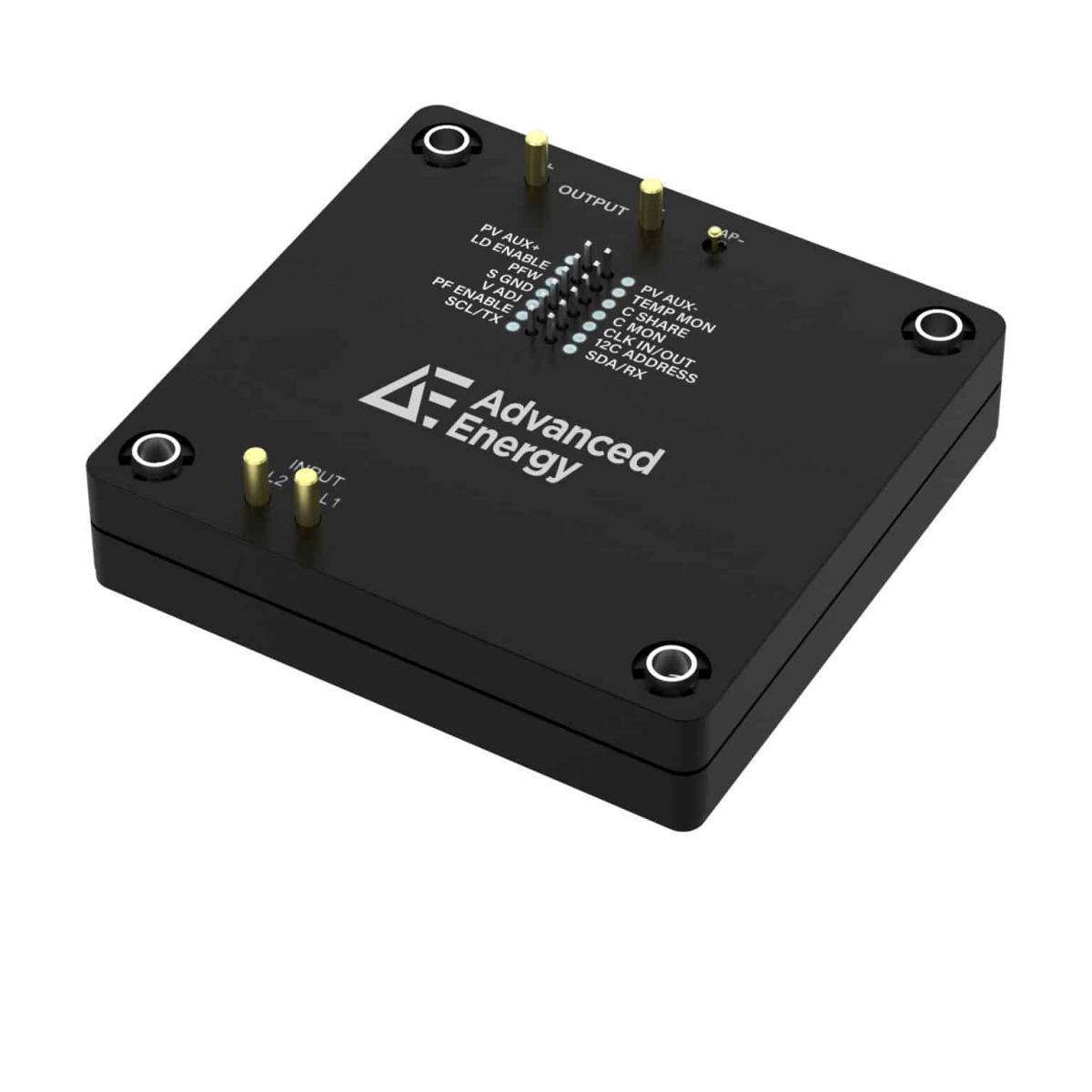
Advanced Energy AIH03ZPFC — 1100 W PFC module in half-brick form factor
Key Specifications
- Output power: 1100 W
- Output voltage: Regulated non-isolated 390 VDC
- Peak efficiency: up to 97.3% (2.3% higher than previous generation)
- Power density: 380 W/in³ (44% increase vs prior designs)
- Loss reduction: 46% lower losses compared to previous-generation PFCs
- Form factor: Standard half-brick 2.4 × 2.3 in (61 × 58.4 mm), installed height 0.52 in (13.3 mm)
- Cooling: Baseplate contact cooling
- Operating temperature: –20 °C to +100 °C (startup from –40 °C)
- Control: Digital PMBus interface with onboard monitoring
- Additional features: Internal inrush current limiting, auxiliary power support
The module integrates functions that are rarely found in half-brick designs, allowing system designers to reduce overall size and complexity while improving efficiency and thermal performance.
Target Applications
- High-density industrial power systems
- Data center and high-performance computing power supplies
- Medical and laboratory equipment
- Telecom and networking infrastructure
- Applications requiring compact AC-DC front-end conversion
By combining high power, high efficiency, and extensive integrated functionality in a standard half-brick package, the AIH03ZPFC enables denser and more efficient power architectures.
Source: Electronics For You