



Synaptics has launched the Astra SR200 series — part of its new xMCU range — designed to bring multi-modal artificial intelligence processing directly to the edge. The processors combine multiple cores, a dedicated AI engine and custom DRAM, enabling more complex on-device AI models for wearables, smart cameras, sensors and industrial vision systems.
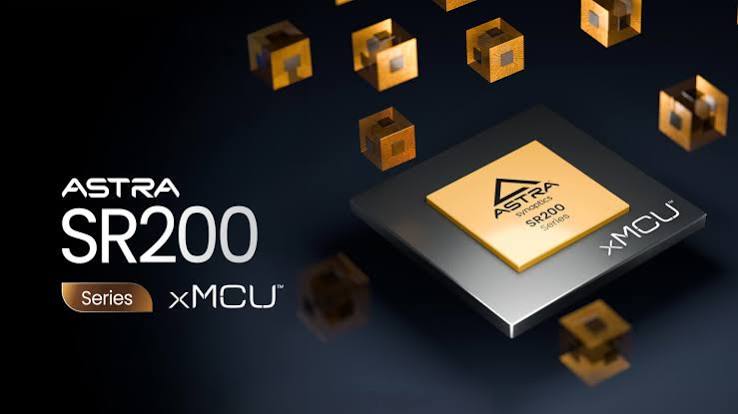
Synaptics Astra SR200 series multi-modal edge AI xMCU processors
Key Characteristics
- AI engine: Torq AI engine with Google Research Coral NPU
- Performance options (pin-compatible):
- SR210 — up to 200 GOPS (voice and sensor applications)
- SR230 — up to 300 GOPS (vision + display, optional audio)
- SR250 — up to 400 GOPS (vision + display with dual pathways)
- CPU cores:
- Arm Cortex-M85 up to 800 MHz (high performance)
- Arm Cortex-M52 (energy-efficient processing)
- Optional DSP: Tensilica HiFi 5 for audio processing
- Memory:
- Up to 8 MB SRAM
- Bespoke DRAM up to hundreds of megabytes (claimed up to ⅓ lower power than typical system DRAM)
- Software support: open-source MLIR/IREE compiler, Zephyr RTOS
- Security: hardware security, crypto acceleration, tamper detection, secure boot
- Industrial features (selected variants): 1 Gb Ethernet, IEEE 1588 TSN, dual CAN-FD
- Uniform hardware architecture and software development kit across the family
By integrating a powerful AI engine with on-chip custom DRAM and high-performance MCU cores, the SR200 series overcomes traditional MCU limitations and enables true multi-modal AI (vision, audio, sensor fusion) at the edge without relying on external application processors.
Target Applications
- Wearables and battery-powered sensors
- Smart cameras and set-top boxes
- Industrial vision and audio systems
- Multi-modal edge AI devices
Source: Electronics For You